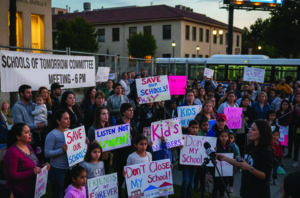
在San Jose的 Almaden 地區,原本寧靜的社區氛圍近期被一項沉重的行政指令打破。
聖荷西聯合學區(SJUSD)下屬的「Schools of Tomorrow」委員會,在缺乏充分前期溝通的情況下,拋出了一項令家長措手不及的方案:計畫在 Williams Elementary 與 Simons Elementary 之間「二選一」關閉其中一所小學。
這項突襲式的公告,不僅引發了社區的集體焦慮,更將公立教育體系中「數據指標」與「人文關懷」之間的衝突推向了風口浪尖。
數據背後的盲點:被忽略的社區脈絡
學區官方將關校的主因歸結於長期學生入學人數下降、營運成本上升及資源重整。然而,深入分析委員會提出的報告,社區家長指出了幾項關鍵的數據缺失:
- 動態發展vs.靜態數據: 報告僅回顧過去,卻未充分納入 Almaden 區域未來住宅發展及潛在人口回流的預期。
- 隱形成本的轉嫁: 關閉校舍後的通勤距離增加、周邊學校承載量趨於飽和,以及對家庭工作平衡的衝擊,並未被列入決策成本。
- 人為製造的對立: 學區採取「二選一」的淘汰赛模式,迫使兩所優秀學校競爭存續,不僅撕裂了鄰里關係,更違背了教育合作的初衷。
從教室到街頭:當「安全感」面臨威脅
對學區官員而言,學校可能是資產負債表上的項目;但對於小學生來說,那是他們建立安全感的核心。家長反映,許多孩子已開始擔憂與朋友分離、必須適應新環境,這種心理層面的不安,往往是行政決策中最難量化卻最沉重的代價。
由於不滿學區採取「先決定、後諮詢」的傲慢姿態,Almaden 社區正發起大規模的反擊行動:
- 集體抗議: 家長與學生計畫於週二下午前往 SJUSD 辦公室外集結,並於晚間 6:00 PM 委員會開會時表達堅決反對立場。
- 政治施壓: 校友與居民已發動大規模致信行動,聯名向聖荷西市長、市議員及學區官員陳情,要求正視民意。
這場抗爭反映出的核心議題是:公立教育的決策過程是否真正尊重其服務的社區?
Almaden 的居民並非不理解財政現實,但他們要求的是一個透明、合理、以孩子為本的對話過程。在犧牲孩子學習穩定性之前,學區是否已窮盡所有資源整合的可能性?還是僅僅選擇了一條最簡單、卻對基層傷害最大的行政捷徑?
隨著週二抗議行動的逼近,所有人的目光都將集中在 SJUSD 辦公室。這不只是兩所學校的存廢,更是對聖荷西教育體系價值觀的一次重大檢閱。
記者/汮均
SJUSD’s Sudden School Closure Decision: Why Almaden Parents and Children Are in a Panic
In the Almaden area of San Jose, the usually quiet community atmosphere was recently shattered by a heavy administrative directive. The “Schools of Tomorrow” committee, under the San Jose Unified School District (SJUSD), released a proposal without sufficient prior communication that caught parents completely off guard: a plan to close either Williams Elementary or Simonds Elementary in a “one-out-of-two” elimination style.
This surprise announcement has not only sparked collective anxiety throughout the community but has also pushed the conflict between “data metrics” and “humanistic care” within the public education system to the forefront.
Blind Spots Behind the Data: A Disregarded Community Context
The district officially attributes the primary reasons for the closures to a long-term decline in student enrollment, rising operating costs, and the necessity of resource realignment. However, after an in-depth analysis of the committee’s report, community parents have pointed out several critical data omissions:
- Dynamic Development vs. Static Data: The report focuses solely on the past and fails to adequately account for future residential development in the Almaden area and the potential for a rebound in the school-age population.
- Transfer of Hidden Costs: The increased commuting distances following a closure, the saturation of capacity at neighboring schools, and the impact on work-family balance were not factored into the “cost” of the decision.
- Man-made Conflict: By adopting a “two-choose-one” elimination model, the district is forcing two high-performing schools to compete for survival. This not only tears apart neighborhood relationships but also betrays the fundamental spirit of educational cooperation.
From Classrooms to the Streets: When “Security” is Under Threat
To district officials, a school might just be a line item on a balance sheet; but for elementary students, it is the core of their emotional security. Parents report that many children have already begun to worry about being separated from friends and having to adapt to a new environment. This psychological instability is often the heaviest price of administrative decisions—and the hardest to quantify.
Infuriated by the district’s perceived “decide first, consult later” arrogance, the Almaden community is launching a large-scale pushback:
- Collective Protest: Parents and students plan to gather outside the SJUSD office this Tuesday afternoon, standing in firm opposition as the committee meets at 6:00 PM.
- Political Pressure: Alumni and residents have launched a massive letter-writing campaign, petitioning the Mayor of San Jose, City Council members, and school district officials to respect public opinion.
Conclusion: A Major Test of Educational Values
The core issue reflected in this struggle is whether the decision-making process of public education truly respects the community it serves.
Almaden residents are not oblivious to fiscal realities, but they demand a transparent, reasonable, and child-centered dialogue. Before sacrificing the stability of a child’s learning environment, has the district exhausted all other possibilities for resource integration? Or have they simply chosen the easiest administrative path—one that inflicts the greatest harm on the grassroots level?
As the Tuesday protest approaches, all eyes are on the SJUSD office. This is more than just a matter of whether two schools stay open; it is a major test of the values held by the San Jose educational system.
By Jun-Jun